English
 Deutsch
 Español
 Français
 Italiano
 日本語
日本語 Русский
 中文
中文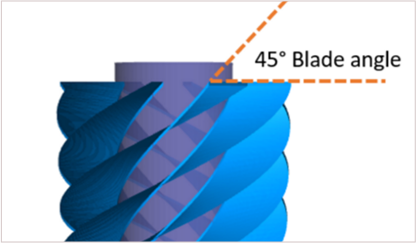
- Author
- 25 September 2025
How to design parts for metal 3D Printing
A technical guide to DfAM optimization, material performance, and cost-reduction strategies for industrial-grade metal 3D prints.
With the gradual popularization of 3D printing, more users are directly considering metal 3D printing for final product manufacturing. But how do you design a product specifically for the metal additive process? What critical details require your attention? IN3DTEC analyzes essential metal printing design skills through real-world cases below.
1. HIGH-PERFORMANCE METAL MATERIALS AND THEIR ADVANTAGES
Selecting the right material is the first step in successful DfAM (Design for Additive Manufacturing). IN3DTEC offers the following industry-grade materials:
- Titanium (Ti64, Grade 5): High strength-to-weight ratio, excellent mechanical properties, corrosion resistance, and biocompatibility.
- Aluminum (AlSi10Mg): High plasticity, excellent thermal and electrical conductivity; suitable for welding and pressure processing.
- Stainless Steel (316L): High strength, superior corrosion resistance, and excellent polishing performance.
- 17-4PH Stainless Steel: High elongation, wear resistance, and exceptional tensile/yield strength.
- Maraging Steel: High heat resistance with outstanding tensile strength.
- Copper: Optimized for high electrical and thermal conductivity applications.
- Inconel 718: Exceptional heat resistance for extreme environments.
2. FREQUENTLY ASKED QUESTIONS (FAQ) ON METAL 3D PRINTING
2.1 Dimensional & Feature Constraints
- Minimum Wall Thickness: For edges/details, we recommend a 0.6mm minimum. For the entire part, a 1.2mm minimum is advised to avoid deformation risks.
- Letters, Grooves, and Steps: * Sunken Font: Width ≥ 0.6mm; Depth between 0.6mm and 1.0mm.
- Protruding Font: Width ≥ 0.6mm; Height ≥ 0.6mm.
- Grooves: Minimum width of 0.6mm.
- Gap Width: A minimum clearance of 0.6mm is recommended between walls.
- Assembly Clearance: If parts require assembly, a single-side clearance of 0.15mm is suggested.
2.2 Threads and Precision Post-Processing
- 3D Printed Threads: Printed threads are generally not suitable for direct use. Tapping or secondary CNC machining is necessary for functional threads.
- Surface Smoothness: To improve finish, export high-resolution STP files rather than low-quality STL. Printing orientation and manual/magnetic polishing also play key roles.
- CNC Machining: IN3DTEC provides integrated CNC machining for 3D printed parts to meet tight tolerances.
- Anodizing Aluminum: Possible, though the finish may not be as uniform as traditional machined aluminum.
2.3 Understanding Supports and Geometric Rules
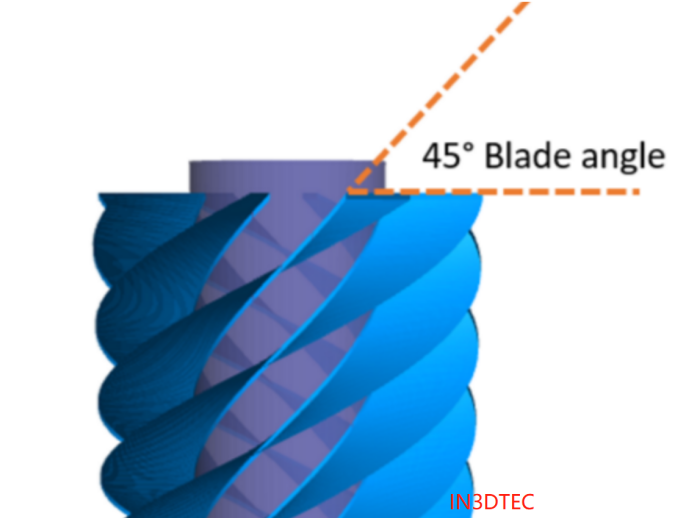
- The 45° Rule: Angles greater than 45 degrees typically do not require support, while smaller angles do.
- Internal Channels: Smaller channels can often be self-supporting. For complex tube-like structures, splitting parts and then soldering is an effective strategy.
- Support Necessity: While IN3DTEC prefers adding supports to minimize risk, we can accommodate "support-free" research projects upon request (though failure risks are higher).
2.4 Physical Properties & Connectivity
- Density: Our metal prints reach a density of 99.99%.
- Airtightness: IN3DTEC uses specialized tools to test and ensure air and water tightness under varying pressures.
- Soldering/Welding: Metal prints can be joined using a combination of laser welding and argon arc welding.
- Copper vs. Gold: Copper is fully printable; however, Gold is currently unavailable due to its low laser resistance and gas protection complexities.
2.5 Enhancing Strength via Heat Treatment
- Stress Relief Annealing: Common treatment for internal stress relief and preventing deformation.
- Vacuum Annealing (Professional): The superior method to significantly improve bending strength and fatigue resistance.
3. STRATEGIES TO REDUCE METAL 3D PRINTING COSTS
The cost of metal 3D printing is primarily driven by material weight. To optimize your budget:
- Lightweighting: Reduce weight through Topology Optimization. Software like Altair OptiStruct, nTopology, and Autodesk Fusion 360 can significantly lower costs by removing unnecessary material.
- Expert Review: Selecting a professional provider like IN3DTEC ensures your design is reviewed for manufacturability before printing, preventing costly failures.
Ready to optimize your design? Contact our engineering team for a technical review or an instant quote.